If you are home shopping in La Cañada Flintridge, architecture is not just about curb appeal. It shapes how you live in the home, how the house sits on the lot, and what updates may make sense over time. In a foothill market known for older single-family homes, mountain views, and custom character, understanding local home styles can help you make a smarter decision. Let’s dive in.
Why architecture matters in La Cañada Flintridge
La Cañada Flintridge has a distinct housing profile. According to Census QuickFacts, the owner-occupied housing rate is 86.9% and the median owner-occupied home value is $2,000,000+, while SCAG reports that 94.5% of the housing stock is single-family detached. SCAG also shows that about 62.3% of homes predate 1960, which helps explain why the city feels established and architecturally layered rather than uniform.
That local context matters when you tour homes. You are often comparing different eras of design, not just finishes or square footage. In practical terms, buyers here are usually weighing style, lot use, views, and renovation potential all at once.
What shapes local home design
The city’s residential design guidelines place a strong focus on compatibility. That includes architectural style, scale, roof form, orientation, setbacks, and how a home relates to the shape and contours of its site. The city also notes that traditional architecture is generally encouraged, while boxy, tract-like forms are discouraged.
The Downtown Village Specific Plan describes a local architectural mix that includes Spanish, Mission, Spanish Colonial Revival, Italian Renaissance, Craftsman, and Monterey styles. Combined with the city’s development history from ranch land and early subdivisions into a low-density residential community, that creates a housing market with visible layers of prewar, postwar, and newer custom homes.
Ranch homes in La Cañada Flintridge
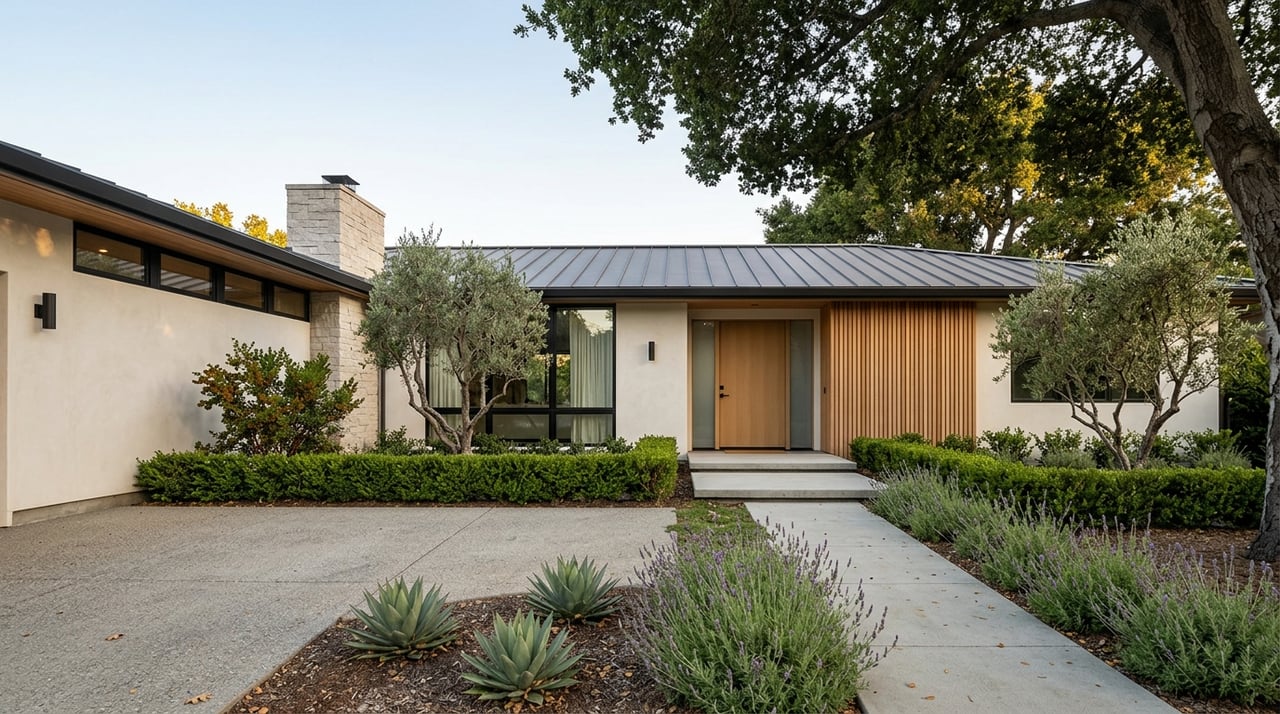
Ranch is one of the styles buyers are very likely to encounter here. The city describes ranch homes as low-pitch houses with gable or shake roofs, large overhangs, asymmetrical forms, informal layouts, integrated attached garages, and materials like wood or brick. Most importantly, they tend to spread horizontally across the lot instead of stacking upward.
For many buyers, that layout feels practical and comfortable. Ranch homes often offer easier day-to-day circulation, fewer stairs, and strong access to patios, yards, and outdoor living areas. They can also be appealing if you want a home that may support outward expansion more naturally than a compact two-story design.
What ranch homes feel like day to day
In real life, ranch homes often feel relaxed and easy to navigate. Rooms may connect in a more casual way, and the house often opens directly to the backyard or side yard. In a foothill setting like La Cañada Flintridge, that can make the lot feel like part of the home.
Mid-century modern and modern homes
La Cañada Flintridge has real mid-century credentials. The LA Conservancy identifies the Gainsburg House as a 1948 mid-century modern residence, and notes that J.R. Davidson’s Case Study House No. 15 is one of the few still standing in the city. Davidson’s work is known for one-story forms, long low rooflines, deep overhangs, open floor plans, clerestory windows, built-ins, and spaces that connect indoor and outdoor living.
Those are the design cues you may notice when touring mid-century homes in the area. These homes often feel open, light-filled, and closely tied to the lot. Buyers who value original design character, clean lines, and architectural pedigree often gravitate to this category.
Why buyers are drawn to mid-century design
Mid-century homes usually appeal to buyers who want simplicity with intention. The floor plans can feel airy, and the glazing and rooflines often create a strong connection to light and landscape. In La Cañada Flintridge, that can be especially attractive where outdoor space and views play an important role.
Traditional revival styles you may see
La Cañada Flintridge also includes a broad mix of traditional revival architecture. The city’s style list includes Spanish Colonial Revival, Mediterranean or Italian Renaissance, Monterey Period Revival, Neoclassical, Tudor, Colonial, Cape Cod, Craftsman, and Minimal Traditional. These homes often present a more formal street presence than ranch or mid-century designs.
You may notice balanced facades, porches, arches, shutters, dormers, stucco, clapboard siding, balconies, terraces, or courtyards depending on the style. Compared with ranch or modern homes, traditional homes may feel more room-based and structured in their layout. For some buyers, that translates to classic curb appeal and a strong sense of architectural identity.
Early local character still matters
A useful local example is the Lanterman House, designed in 1915. It is one of the few surviving pre-1920 residences in the city and features a U-shaped courtyard plan with pergolas and garden-oriented outdoor space. That example shows that in La Cañada Flintridge, the connection between home and landscape has deep roots.
Contemporary custom homes in the foothills
Contemporary design is present in La Cañada Flintridge, but it is not the dominant historic style. The city allows other styles when they fit the neighborhood, even as it continues to discourage boxy, garage-dominant homes. That suggests newer contemporary houses here tend to be custom and design-driven rather than typical tract product.
Recent local examples highlighted in design media include open plans, strong indoor-outdoor flow, minimalist finishes, concrete feature walls, floor-to-ceiling glass, patios, and decks. The best contemporary homes in this market usually feel intentional and site-sensitive. In other words, they stand out because of thoughtful design, not simply size.
How style affects floor plans and outdoor living
In La Cañada Flintridge, architecture has a direct impact on how you use the home. Ranch and mid-century homes are often the easiest to connect to lifestyle because they are typically horizontal, open to the lot, and built around easy circulation. Ranch homes tend to feel more rambling and informal, while mid-century homes often emphasize light, openness, and clean transitions between inside and outside.
Traditional revival homes can offer a different experience. Because their style cues often include symmetry, centered entries, and more formal facades, the interiors may feel more defined room by room. That can be a plus if you prefer a stronger sense of separation between living areas.
Outdoor space is especially important in this city. The city’s style descriptions for Spanish Colonial Revival and Mediterranean homes call out patios and terraces, while local modern examples emphasize decks and outdoor rooms. Whether you are drawn to a courtyard, lawn, terrace, or view-facing patio, the style of the house often shapes how the lot lives.
What to know about renovation potential
If you are buying with future updates in mind, local design rules matter. The city says additions should look integrated, with attention to shape, proportions, massing, roof slope, materials, colors, and window types. The goal is for changes to feel as if they have always belonged.
The guidelines also note that one-story additions are generally easier to integrate, while second-story additions should avoid a pop-up look. That is especially relevant in a city where compatibility with the surrounding neighborhood is a key design standard. It means renovation is not only about what you want to build, but how well the design fits the existing house and site.
Style-by-style renovation lens
Here is a simple way to think about renovation potential based on the city’s style definitions and compatibility rules:
- Ranch homes often lend themselves to outward expansion because of their horizontal form.
- Mid-century homes often benefit from preserving original rooflines, glazing, and indoor-outdoor relationships.
- Traditional homes usually need additions that respect symmetry, proportions, and materials.
- Contemporary homes typically work best when the design stays cohesive from the start.
The city also has a Residential Rehabilitation Program for eligible owner-occupied single-family detached homes, which reflects a local interest in maintaining and preserving existing housing.
How buyers can choose the right style
The best home style for you depends on more than looks. In a premium market like La Cañada Flintridge, architecture should be part of a larger conversation about lifestyle, lot orientation, originality, and how much change you want to take on after closing. A beautiful facade matters, but so does how the house lives.
A helpful starting point is to think in terms of daily use:
- Choose ranch if you want one-level living and easy circulation.
- Choose mid-century if you value design pedigree and indoor-outdoor flow.
- Choose traditional revival if you want classic character and a more formal feel.
- Choose contemporary if you want clean lines, openness, and custom expression.
If you are considering an older home, preservation may also be part of the conversation. The LA Conservancy notes that La Cañada Flintridge adopted the Mills Act in 2012 and has identified historic resources. For buyers who care about authenticity and stewardship, that can add another layer of value to the decision.
When you look past surface finishes and focus on style, site, and long-term fit, you are more likely to choose a home that works for the way you actually want to live. If you want expert guidance on evaluating architectural character, renovation potential, and what makes sense for your goals in La Cañada Flintridge, connect with Vonsale Jackson for a personalized consultation.
FAQs
What architectural home styles are common in La Cañada Flintridge?
- Common styles noted in city planning documents include Ranch, Spanish, Mission, Spanish Colonial Revival, Italian Renaissance, Craftsman, Monterey, Tudor, Colonial, Cape Cod, Neoclassical, Minimal Traditional, and some newer custom modern homes.
Are ranch homes common in La Cañada Flintridge?
- Yes. Ranch homes are a common fit for the city’s established single-family setting and are typically recognized by low-pitch roofs, broad one-story layouts, attached garages, and easy access to outdoor spaces.
Do mid-century modern homes exist in La Cañada Flintridge?
- Yes. The city has notable mid-century modern history, including the Gainsburg House and J.R. Davidson’s Case Study House No. 15, and buyers may still find homes with low rooflines, clerestory windows, and strong indoor-outdoor flow.
How old is the housing stock in La Cañada Flintridge?
- SCAG data cited in the research report indicates that about 62.3% of the housing stock predates 1960, with the 1950s representing the largest decade of construction.
What should buyers know about remodeling homes in La Cañada Flintridge?
- Buyers should know that the city emphasizes compatibility in additions and remodels, including massing, roof form, materials, proportions, and how the design relates to the original house and site.
Are contemporary homes typical in La Cañada Flintridge?
- Contemporary homes exist, but they are generally better understood as custom, design-driven homes rather than the city’s main historic housing type.
Why does architecture matter when buying in La Cañada Flintridge?
- Architecture affects layout, outdoor living, renovation options, and how a home fits the lot, which makes it an important part of the buying decision in a high-value foothill market.